

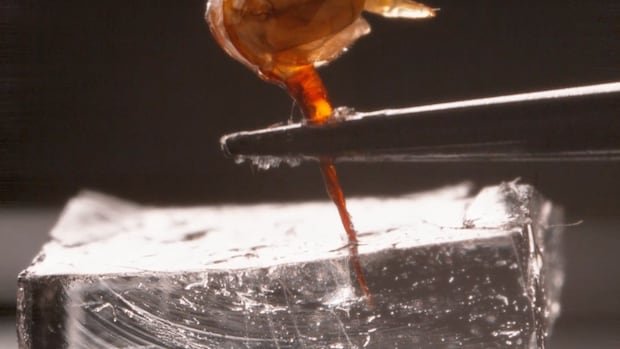

A worker honey bee’s stinger, belonging to the western honey bee species (Apis mellifera), is a final defense tool meant to penetrate flesh and inject venom, often leading to the bee’s demise. Recent research featured in the Proceedings of the National Academy of Sciences sheds light on the efficiency of this defensive mechanism. Fiorella Ramirez Esquivel, a postdoctoral researcher at Macquarie University in Australia and the lead author, highlighted the use of modern cameras to capture the stinger in action.
The study utilized high-speed cameras to observe the swift bee stinging process, showcasing the translucent nature of the venom sac and stinger. By swiftly removing the stinger from live honey bees and implanting it into an artificial skin substitute before the two-minute active period ends, researchers were able to closely analyze the stinging mechanism.
The research uncovered a fascinating double-piston design within the stinger, where specialized valves work simultaneously to plunge the stinger deeper while maintaining a continuous flow of venom. This intricate system, resembling a complex dance between the valves, was replicated using 3D printing for further analysis.
Juliana Rangel, an apiculture professor at Texas A&M University, expressed awe at the study’s insights beyond traditional microscopic images. The study revealed the prolonged pumping of venom post-sting, with stinger movements lasting up to 15 minutes.
The study also explored the evolutionary significance of honey bee stingers as a defense mechanism for the larger colony, showcasing the unique autotomy method where a part of the body is sacrificed. Unlike other bees, the western honey bee’s stinger remains embedded due to its barbed structure, serving the greater good of colony protection.
Notably, honey bee stingers release pheromones to summon other bees for defense. Despite potential limitations against tougher skin, the stinger’s barbs and continuous penetration enhance the bee’s defense capabilities.
This comprehensive study of the western honey bee’s stinging mechanism not only reveals its intricate workings but also prompts reflections on the evolution of bee defense strategies and potential medical applications.