

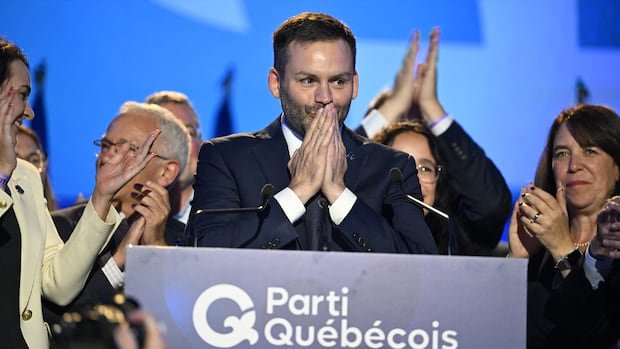

Quebecers have chosen a separatist government, despite most of them not supporting a referendum for independence. This election outcome marks a departure from the 2014 scenario when the Parti Québécois (PQ) under Pauline Marois did not specify a timeline for a potential referendum upon forming a minority government.
The current leader, Paul St-Pierre Plamondon, has long advocated for a referendum within the first four years of a PQ term. Despite Quebec’s historical political divide over sovereignty and the PQ’s core mission, the party managed to secure a minority government three decades after the 1995 referendum on independence.
In his victory address, St-Pierre Plamondon emphasized the significance of Quebec gaining autonomy and recognition, stating that it aligns with the struggle of francophones in North America for justice and equity.
Although most Quebecers prioritize other issues over sovereignty, the election saw a shift towards change, rejecting the Coalition Avenir Québec (CAQ) after eight years in power. The CAQ, led by Christine Fréchette, failed to secure any seats in the National Assembly, signaling a collapse of the party’s support.
Despite polls showing low support for separatism, the PQ managed to form a minority government with just 28% of the popular vote, highlighting the quirks of the first-past-the-post electoral system and potentially igniting debates on electoral reform.
Fréchette’s defeat symbolized the downfall of the CAQ, with the party’s losses benefiting opposition groups like the Conservatives, who made significant gains in ridings, securing their first elected seats in nine decades. The election results pose a challenge for St-Pierre Plamondon, as he navigates working with other parties to advance his agenda and potentially address electoral reform promises.
The outcome of this election underscores the complex political landscape in Quebec and the evolving dynamics of voter preferences and party ideologies.