

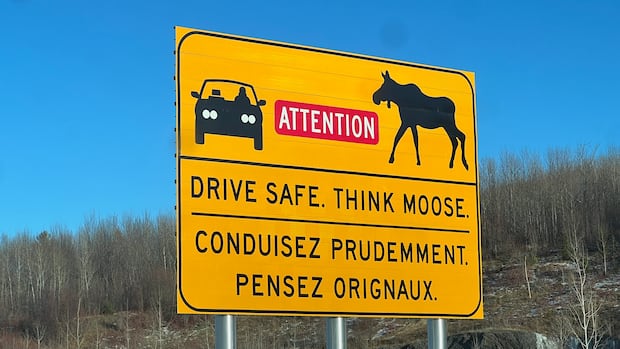

The government of New Brunswick is exploring the implementation of “wildlife reduction reflectors” as an economical strategy to diminish moose-related accidents.
Transportation and Infrastructure Minister Chuck Chiasson expressed his desire to install these reflective posts along Route 17 next year, specifically between Saint-Quentin and Saint-Léonard.
According to Chiasson, these reflectors will be positioned 30 metres apart along the roadside, enhancing visibility for drivers to spot large animals during nighttime.
“Despite the preventive measures already in place, there has been virtually no reduction in the number of collisions from year to year,” he remarked.
Chiasson indicated that there has been a slight rise in moose collisions from 2020 to 2025, even with the province maintaining 330 kilometres of fenced roads.
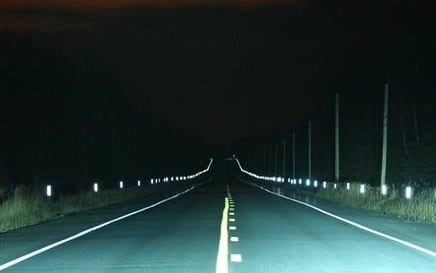
The province’s minister of transportation and infrastructure said he took inspiration from Maine, which has wildlife reduction reflectors installed in three different areas. (Submitted by Eric Ham)
He mentioned that while he is unsure of the exact costs associated with the reflectors, he believes they would be relatively inexpensive compared to fencing, which costs about $160,000 per kilometre.
Chiasson also pointed out that fencing may not always be the best solution.
“Moose and other wildlife are naturally migratory, and confining them to a limited area with fences can negatively impact the herd’s biodiversity,” he stated.
He added, “We had to remove a substantial amount of fencing during the wildfires to allow animals to pass through… we just replaced it this past summer, and it was expensive.”

Transportation and Infrastructure Minister Chuck Chiasson said fencing is costly and can impede on the biodiversity of wildlife. (Ed Hunter/CBC)
Chiasson mentioned that his department has been in discussions with officials from Maine, where reflectors have been installed in three separate locations.
Eric Ham, the senior environmental manager at the Maine Department of Transportation, noted that, similar to New Brunswick, moose pose a “significant threat to motorists traveling in Maine.”
He stated that since the reflectors were introduced in 2008, he believes they have had a positive impact, even though there is no concrete data to substantiate this claim.
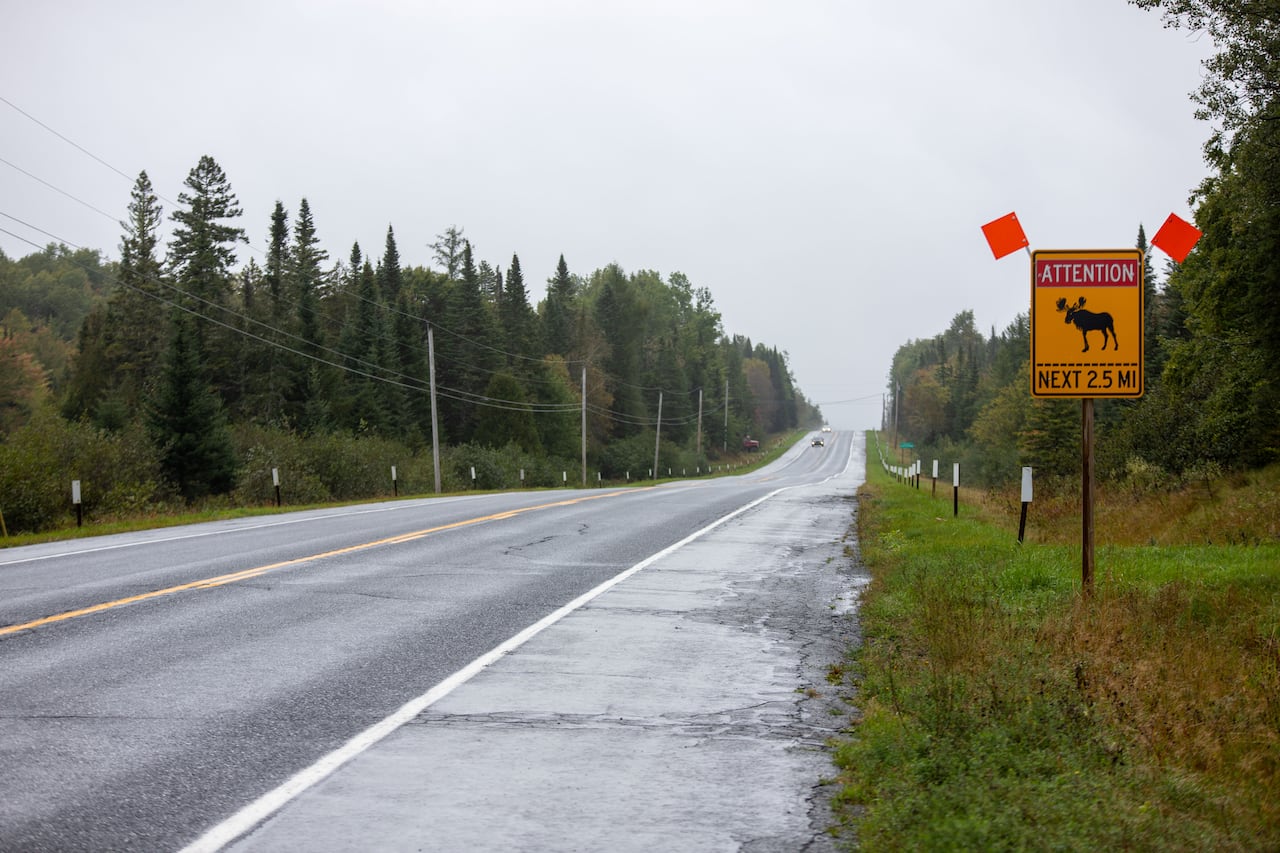
Maine has had reflective posts installed since 2008 as a way to decrease wildlife collisions. (Submitted by Eric Ham)
“We believe they serve a useful purpose,” he expressed. “If they can prevent just one or two serious accidents a year, they are worth the investment.”
“At the very least, they encourage drivers to be more alert when navigating these areas.”
Chiasson confirmed that the province monitors moose collisions, facilitating the assessment of the reflectors’ effectiveness.
He also stated that his department intends to engage with community members for their input.